The Case for Slow Bread
July 25, 2026
Our Sourdough Stater
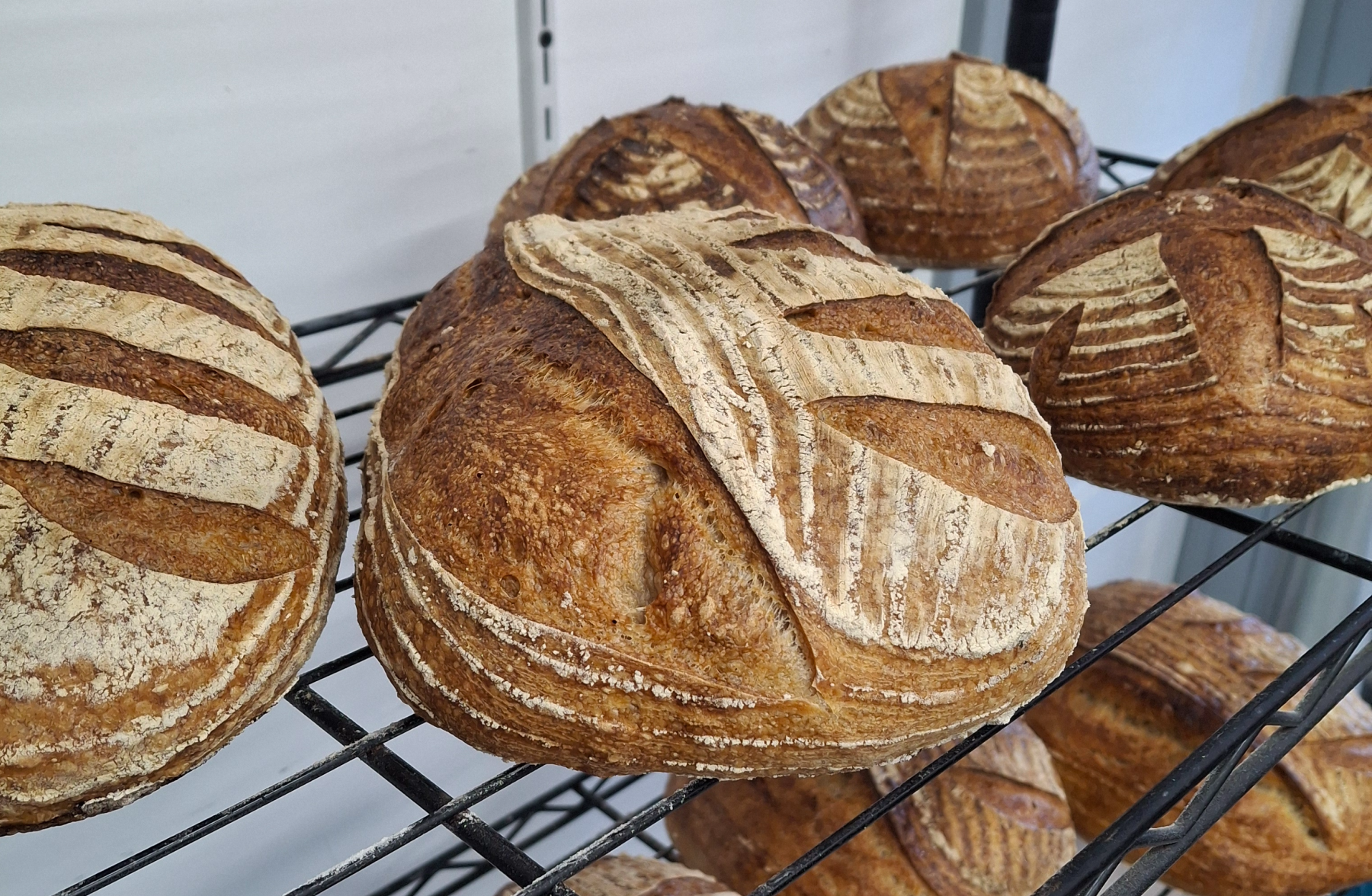
Everything begins with our wild sourdough starter. It's been alive for years, fed daily, never hurried. When it goes into the dough it kicks off a fermentation that commercial yeast simply can't replicate. No shortcuts, no dough conditioners. Just flour, water, salt, and a culture we've been tending since before the bakery had a name.
Bulk Fermentation
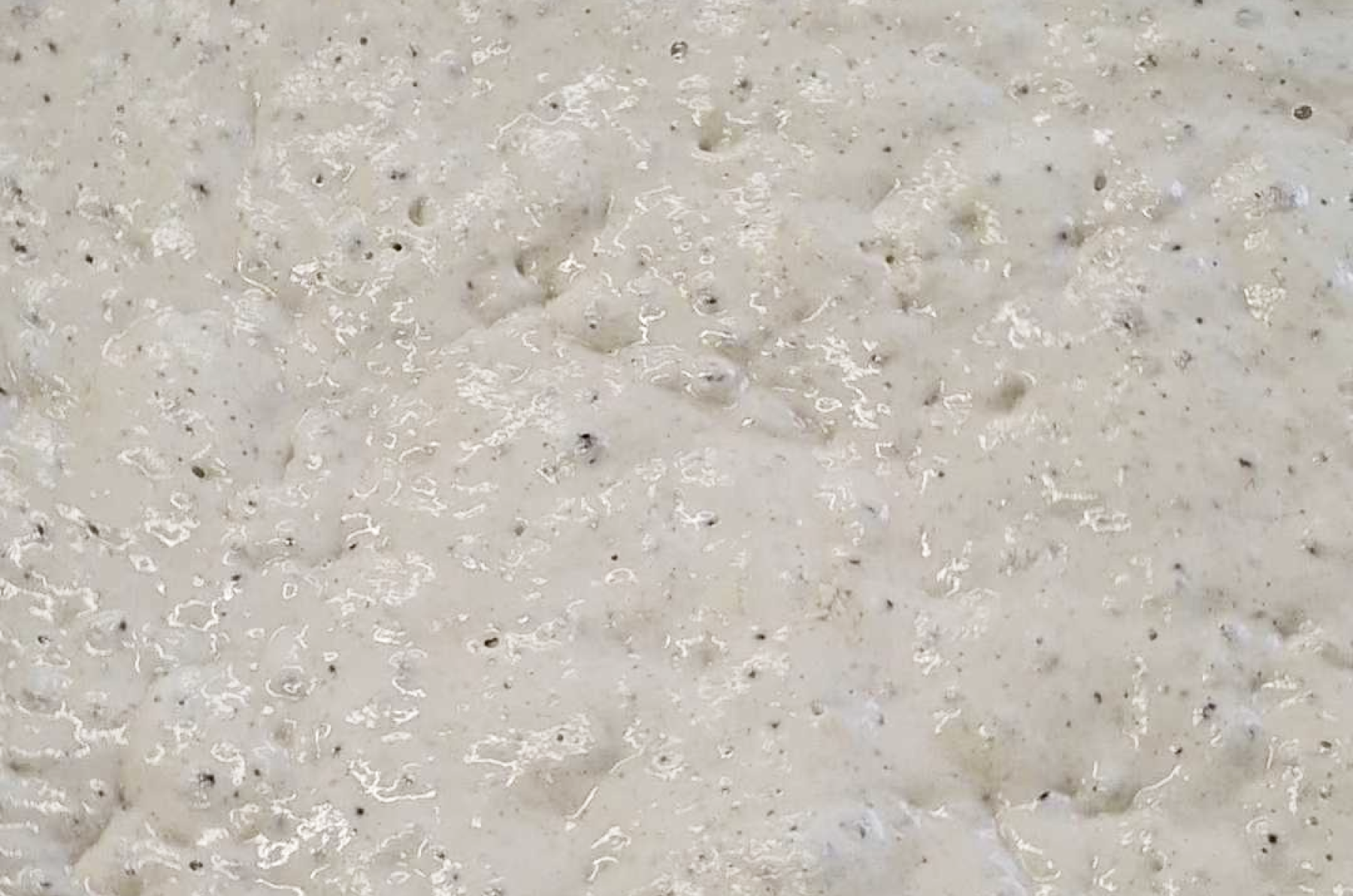
After mixing, the dough rests and rises at room temperature. Wild yeast produces the carbon dioxide that gives bread its rise and open crumb, while beneficial bacteria get to work on flavor. This is where sourdough gets its character. You can't rush it without losing something.
During this stage, we come back to the dough every so often and stretch and fold it — pulling one side up and over, turning the bowl, and doing it again. It looks simple, but it's doing real work. Each fold builds strength into the gluten network without the aggressive kneading you'd use in a fast-rise dough. That gentler approach is part of what gives our loaves their open, irregular crumb instead of a tight, uniform one.
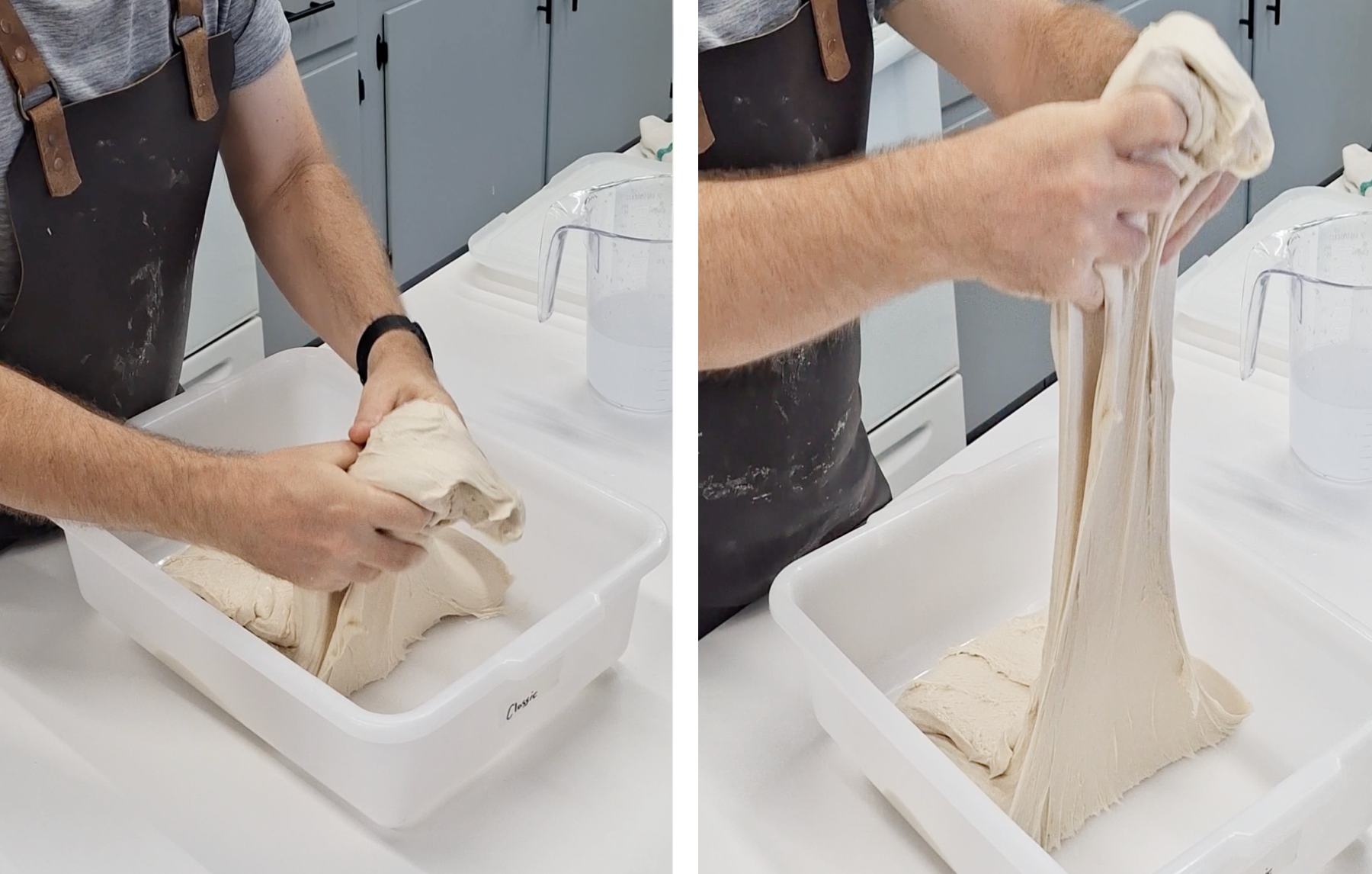
The stretches also redistribute the yeast and food evenly through the dough, and they trap air that gets stretched thinner and thinner with each fold — which is where a lot of that final oven spring comes from. By the end of bulk fermentation, the dough should feel alive: smooth, slightly domed, and jiggly when you nudge the bowl.
Hand Shaping
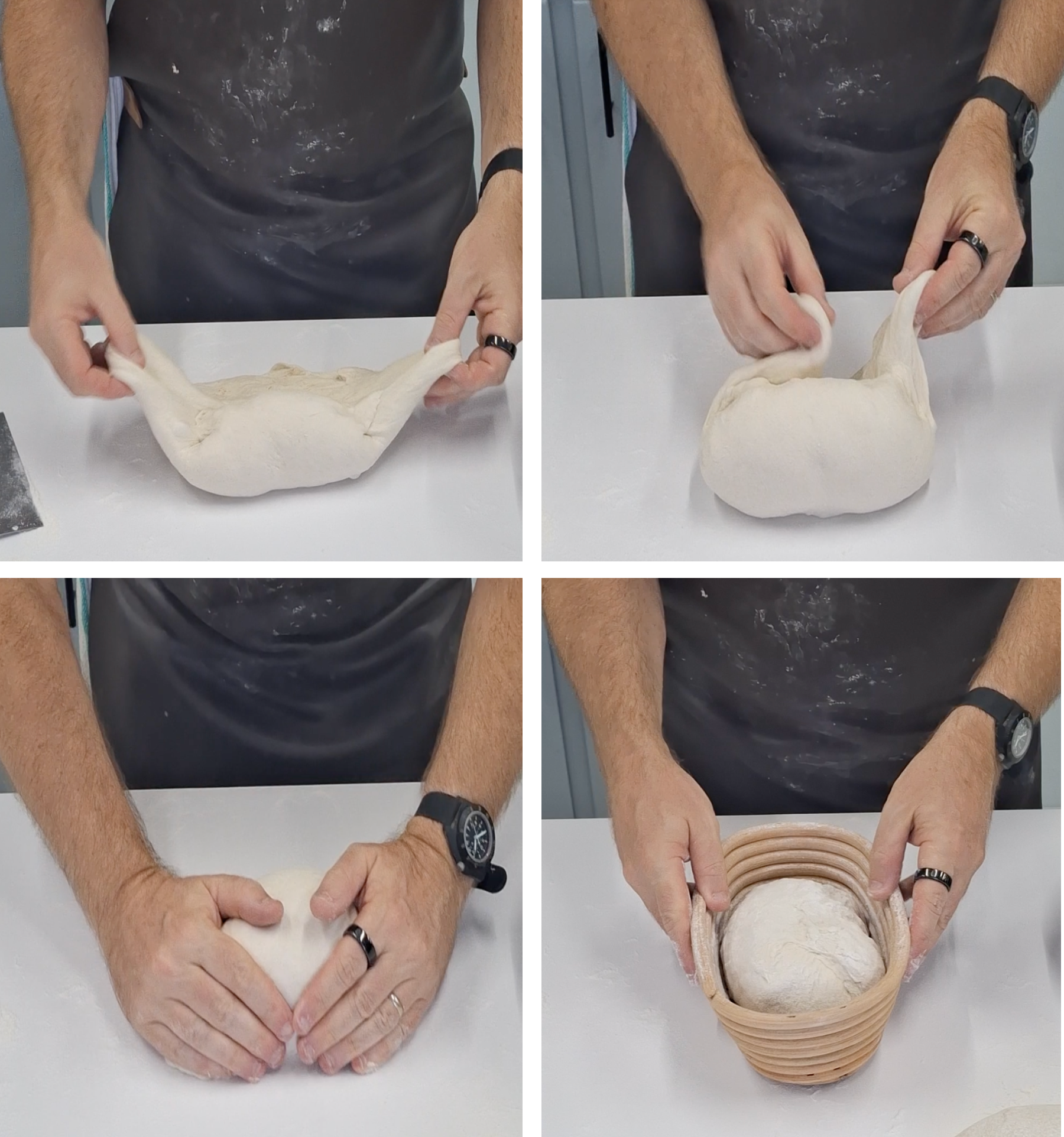
Every loaf is shaped by hand. The tension built during shaping is what gives the bread its lift, structure, and the ear you see on the score. After shaping, loaves go into proofing baskets and head into the refrigerator.
Cold Fermentation
This is the part most people don't know about. The loaves ferment in the cold for for at least a day. Yeast activity slows way down but flavor development doesn't.
The result is a more complex, deeply developed taste and the kind of crust that sings when you cut into it.
Steam, heat, and time
After scoring the loaves, they go straight into a hot deck oven with injected steam in the first minutes. Steam keeps the crust elastic so the loaf can fully spring up before the crust locks in. Then the heat takes over: color, caramelization, and that shatter you hear when you slice through a good sourdough crust.
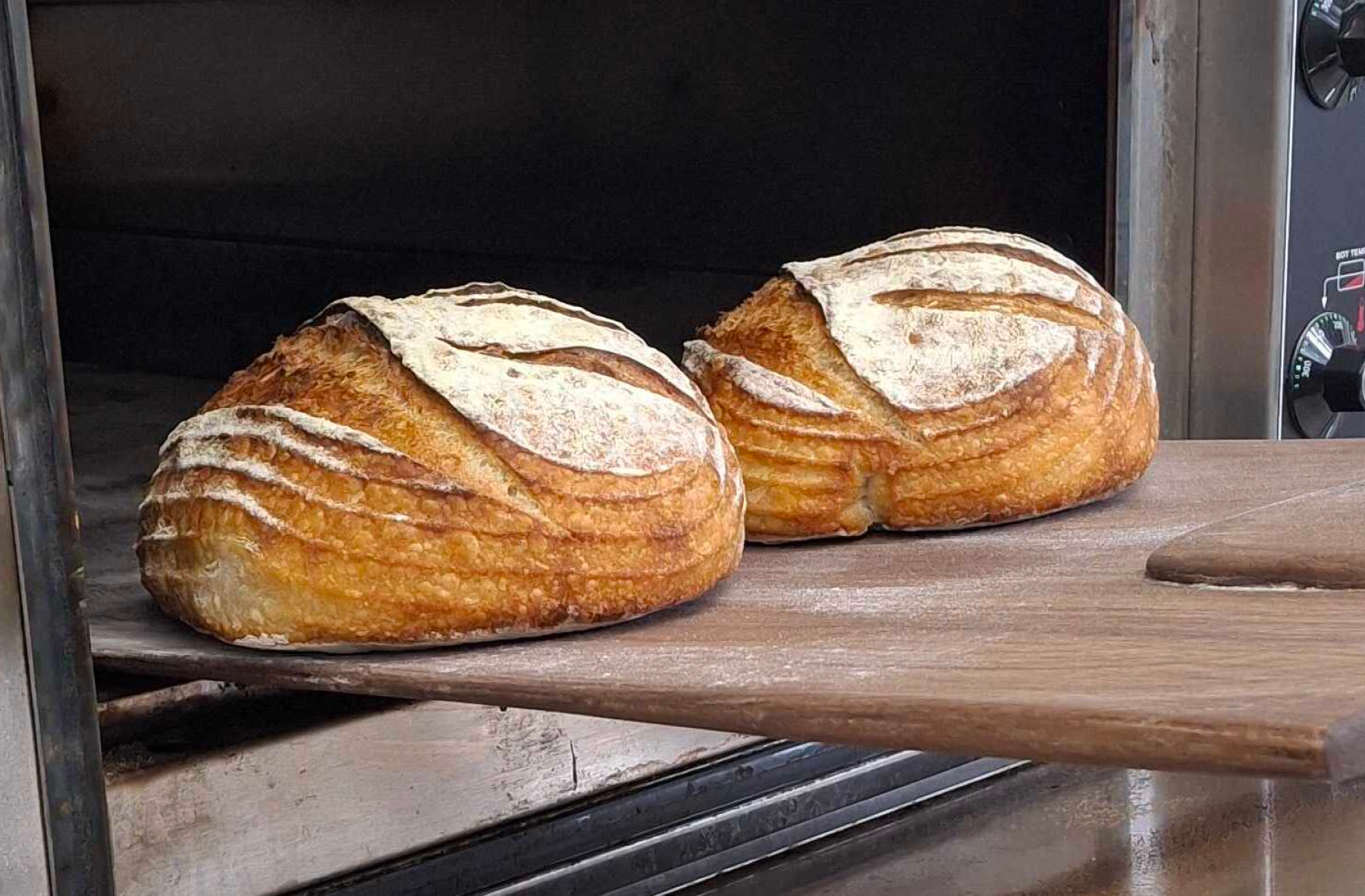
The ingredient list for any of our loaves fits on one line. Flour, water, salt, starter. That's it. What takes days isn't the recipe — it's the craft. Knowing when the bulk ferment is ready. Feeling the right tension during shaping. Reading the dough after many hours in the cold and deciding whether it needs another few hours or goes straight into the oven. These aren't things you can automate or rush. They're the kind of judgments that only come from making a lot of bread and paying close attention.
When you pick up one of our loaves, you're not just getting bread. You're getting real bread, made with real ingredients, crafted by hand and fermented for a long time, right here in Bumpus Mills, TN. ❖
